By Hima Nandan, Partnerships & Marketing; Shruti Anand, Specialist – Marketing and Communication, Udhyam Vyapaar
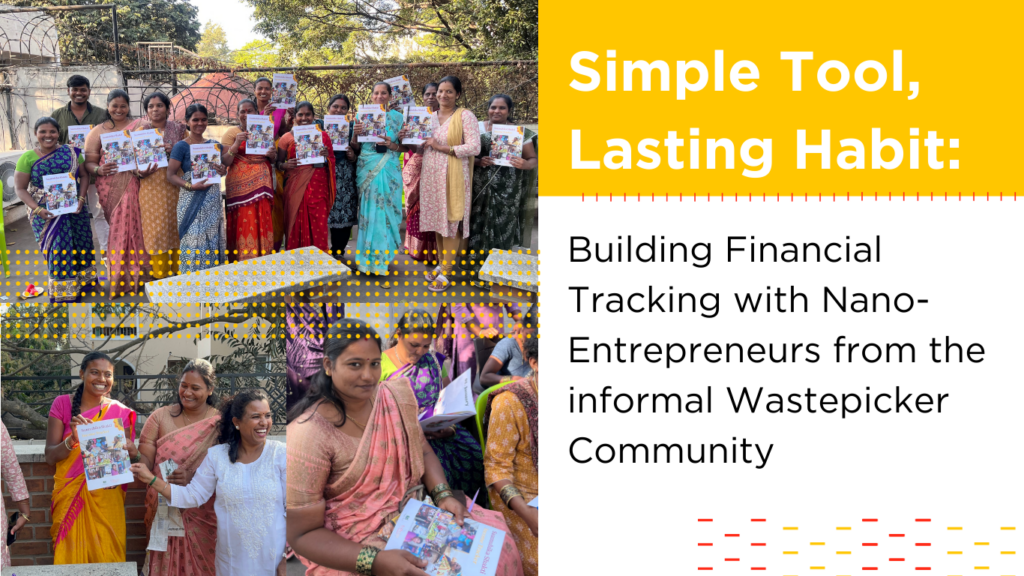
For a little over the past year, Udhyam Vyapaar has been working with members of the waste picker community in Bengaluru through the Saamuhika Shakti initiative. The aim: to enable them to become successful nano-entrepreneurs by making their businesses sustainable. From food vending to crocheting, wire baskets to local snacks, many waste pickers have taken the first steps on their entrepreneurial journey. But as with any transformative effort, the road has not been easy.
A Shift in Identity: From Waste Picker to Business Owner
One of the earliest and most significant challenges was helping individuals see themselves as entrepreneurs in the first place. Many participants had never considered that their efforts, be it selling vegetables, stitching, or making snacks could be viewed as a business. For Udhyam, this meant going beyond working on their business skills. The first step instead was working on their mindsets.
Udhyam spent time listening to each nano-entrepreneur’s story. What were their aspirations? What challenges did they face? And what kind of support could make a real difference? The answers were often layered and deeply personal, requiring tailored, patient responses.
The Practical Side of Entrepreneurship
Udhyam’s training was rooted in practicality. Rather than share theoretical frameworks, the focus was on breaking business concepts into everyday decisions. For example, how might a food vendor increase profit by slightly adjusting their recipe?
Simple experiments, like trying out new locations, bundling products differently, or negotiating better prices became the foundation for deeper entrepreneurial thinking. Confidence grew not through classes, but through doing
Persistent Challenges in the Field
While the businesses are becoming more profitable and sustainable slowly and steadily, the engagement on ground has also highlighted structural and behavioural hurdles that nano-entrepreneurs routinely face:
1. Identifying Committed Entrepreneurs:
Finding waste pickers genuinely interested in business building took time. It required trust-building, clear communication, and verifying readiness.
2. Hesitancy Toward Change:
Even with support, many entrepreneurs were hesitant to change what they knew. Business experimentation felt risky, and patience was required to build trust and support even the smallest shifts.
3. Lack of Access to Capital:
One of the most critical barriers has been credit. Many entrepreneurs have no access to formal finance, relying instead on informal moneylenders with exorbitant interest rates. This keeps them stuck in cycles of debt, making growth extremely tedious.
4. Limited Market Access & Understanding:
Selling within familiar neighbourhoods was the norm, which capped income potential. Entrepreneurs needed help reaching new customers and understanding what wider markets expected.
What’s Working: Strategies That Help
Despite these challenges, the past year has seen clear progress. The adaptive and empathetic approach employed has yielded promising strategies:
Trust Building:
Many waste pickers had been through previous programs that promised much but delivered little. Gaining their trust required consistency and sensitivity. By addressing immediate concerns and being present regularly, the team earned the right to support deeper, long-term change.
Improving Sourcing:
One of the most impactful interventions has been improving sourcing. For example, wire basket makers were taken to wholesale markets where they could access cheaper raw materials and taught to negotiate. This cut costs and significantly improved their margins.
Market Linkages:
Rather than rely only on occasional events or exhibitions, the focus has been to create more regular selling opportunities. Whether through partnerships with local retailers or cross-selling opportunities among entrepreneurs, these new channels are helping businesses become more consistent.
Some entrepreneurs are even diversifying. For example, balloon sellers now also offer festival decorations. Wire basket makers are tying up with flower vendors. These innovations come from within the community but are made possible through external nudges and support.
A Look Ahead
With a foundation laid, the next phase is about scaling impact and deepening longevity of the businesses:
- Strengthening Business Models: Helping entrepreneurs stabilise operations and increase profitability.
- Boosting Incomes: Supporting higher earnings through better pricing, sourcing, and product strategy.
- Encouraging Innovation: Facilitating business experiments and decision-making among entrepreneurs.
- Showcasing Role Models: Identifying successful entrepreneurs as role models to inspire others.
- Expanding Market Access: Creating opportunities for nano-entrepreneurs to reach new customers and access better suppliers.
Small Steps, Steady Progress
Building sustainable nano-enterprises in the waste picker community is a long journey. But the past year has shown that it’s possible with trust, patience, and persistent problem-solving. Sustainable business isn’t just about profits. It’s about giving people the tools and confidence to grow even when the direct support fades. It’s about businesses that last because they are built from the ground up, by people who believe in them.
At Udhyam Vyapaar, the belief remains strong: with the right kind of support, nano-entrepreneurs from the most informal segments can not only earn, but thrive. And in doing so, they show us what inclusive entrepreneurship truly looks like.