In the narrative of India’s growth story, entrepreneurship is often celebrated as a powerful engine of change. Yet, some of the most resilient entrepreneurs remain invisible – operating quietly at the margins, sustaining livelihoods, and powering local economies without recognition or support.
With the support of partners like Fincfriends, organisations like ours are able to go deeper into India’s entrepreneurial landscape, reaching those who are often unseen, unheard, and underserved. Their backing enables us to work closely with nano-entrepreneurs, building pathways for inclusion, dignity, and growth where formal systems rarely reach.
While the MSME sector remains a key focus for policymakers, the conversation largely revolves around largely informal enterprises, overlooking the vast ecosystem of nano-entrepreneurs operating with minimal capital, low turnover, and limited access to formal systems. From street vendors and home-based workers to artisans and local service providers, these businesses may be small individually, but together they form a significant share of India’s workforce.
The Missing Category in MSME
Current definitions of MSMEs fail to capture the reality of nano-enterprises. While micro-enterprises are defined within relatively higher thresholds of investment and turnover, many nano-businesses operate far below these limits.
This absence of formal classification creates a ripple effect. Without being defined, nano-entrepreneurs are not counted. Without data, they are not prioritised. And without prioritisation, they remain largely excluded from schemes, credit systems, and capacity-building efforts designed to support enterprise growth.
Our Work on the Ground: Urban Street Vendors
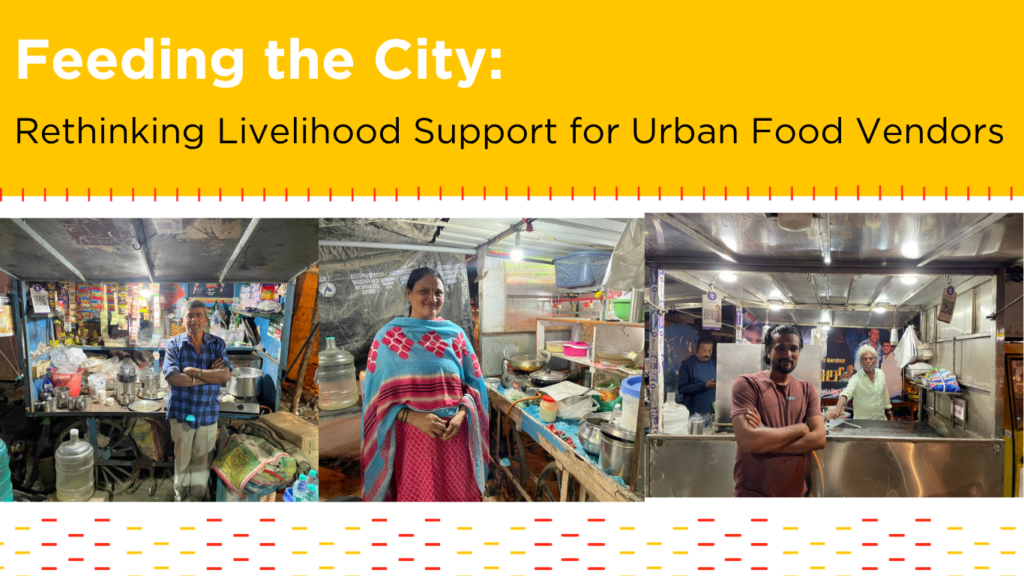
Through our work with urban street vendors – especially food vendors and istri vyapaaris (ironing vendors) – we have seen how targeted, context-driven interventions can unlock real change. With the support of Fincfriends, we have been able to strengthen these efforts, reaching more than 220 nano-entrepreneurs and deepening the quality of engagement.
Food street vendors are being supported through upgraded cooking equipment, improved front-end service areas, and redesigned carts – along with guidance to think more strategically about running and growing their businesses. For istri vendors, efforts are focused on better service positioning and building stronger customer retention practices.
Together, these solutions are enabling more stable livelihoods, greater confidence, and are driving an average income uplift of 20–30%.
Reimagining Inclusion from the Ground Up
To build a more inclusive entrepreneurial ecosystem, it is essential to:
- Formally recognise nano-enterprises within policy frameworks
- Develop datasets that reflect their scale and diversity
- Simplify access to financial and welfare systems
- Design targeted skilling, marketing, and digital inclusion programmes
Such an approach ensures that support is not just available, but accessible and relevant.
Looking Ahead
India’s economic future depends not just on scaling businesses at the top, but on strengthening those at the very base. Nano-entrepreneurs may operate on the smallest margins, but their collective impact is immense.
Recognising them is the first step. Investing in them is next. And building systems around their realities is what will truly make growth inclusive.